Matt RaibleMatt Raible is a writer with a passion for software. Connect with him on LinkedIn.

The Angular Mini-Book The Angular Mini-Book is a guide to getting started with Angular. You'll learn how to develop a bare-bones application, test it, and deploy it. Then you'll move on to adding Bootstrap, Angular Material, continuous integration, and authentication.

Spring Boot is a popular framework for building REST APIs. You'll learn how to integrate Angular with Spring Boot and use security best practices like HTTPS and a content security policy.

For book updates, follow @angular_book on Twitter.

The JHipster Mini-Book The JHipster Mini-Book is a guide to getting started with hip technologies today: Angular, Bootstrap, and Spring Boot. All of these frameworks are wrapped up in an easy-to-use project called JHipster.

This book shows you how to build an app with JHipster, and guides you through the plethora of tools, techniques and options you can use. Furthermore, it explains the UI and API building blocks so you understand the underpinnings of your great application.

For book updates, follow @jhipster-book on Twitter.

10+ YEARS


Over 10 years ago, I wrote my first blog post. Since then, I've authored books, had kids, traveled the world, found Trish and blogged about it all.
You searched this site for "free sex movies for men non blog". 1,227 entries found.

You can also try this same search on Google.

MacBook Pro and Wireless

The only major issue I've had so far with my MacBook Pro is wireless connectivity. It works fine at my office, works great at Starbucks, but not at home. My router is a Netgear WGT624.

The Netgear works flawlessly with my Windows XP Desktop (HP Pavilion 1250n) and PowerBook G4. It works with no password, 40-bit WEP and 128-bit WEP. But not with the MacBook Pro. Is there something special I have to set on my router for it to work with the MacBook Pro?

I posted this question on the Apple Discussion forums yesterday (which appear to be powered by Jive Forums). The response? Crickets. Oh well, I think I'll just leave my MacBook at the office and ignore this issue for now.

Update: Looks like Apple is aware of many issues with the MacBook Pro. Hat tip to Jeff for the article.

Posted in Mac OS X at Feb 27 2006, 09:46:39 AM MST 73 Comments

Denver Tech Meetup on March 9th

Stephen O'Grady:

Ok, I know I dragged this out far too long - mostly due to travel concerns - but let's just pick a date and run with it. So the date for the next Denver Tech Meetup is now officially March 9th.
...
Venue will be - barring unforeseen circumstances - the same as last time, the Wazee Supper Club. It's easy to get to, close to some of the downtown offices, and most importantly, is my favorite.

If you don't know what the Tech Meetup is all about, I like to describe it as a User Group meeting without the User Group; there's no common affiliation other than we're all in tech (and even that rule can be bent ;), and no technical meetings - just the after-meeting beers/cocktails (and maybe food).

This meeting was a lot of fun last time. Matt Filios and I enjoyed talking to guys doing PHP, Rails and even some developers from the OpenSolaris project. I highly recommend attending.

Posted in Open Source at Feb 23 2006, 08:15:47 PM MST 1 Comment

MacBook Pro: Kicking ass and taking names

I received my MacBook Pro this morning, and I've spent the day setting it up, doing some development and running some performance comparisons. The setup was easy: I just booted my PowerBook into Firewire mode and copied over all the files I needed. Everything works for the most part. I did have some issues with IDEA and Eclipse, but got both working after doing a few try and try-again shenanigans. Eclipse was crashing when I'd browse to set my workspace; typing it in manually fixed the problem. IDEA hung the first time I opened it; killing it and restarting fixed the problem.

As far as performance, this thing fricken' rocks! Safari launches in under a second and you're browsing before the dock icons hits the top of its first bounce. Firefox is a different story (likely b/c it hasn't been compiled for x86) - it takes 10 seconds to launch. The good news is once it's up, there doesn't seem to be any performance issues. Safari is amazing though - the speed does wonders for GMail and it actually feels like a desktop application.

When I mentioned yesterday that I was going to compare the MacBook to my desktop, Rob Williams said it wasn't a fair comparison. I agree - but I really wanted this machine to be the best machine I could possibly buy. With my (very unofficial) performance tests, it appears like it is. It's faster than my dual-core AMD 64 desktop machine that has 3 GB of RAM. Now, I have had the desktop for a couple months, so it's possible I'm suffering from OS Rot, but still - it's impressive it keeps up. Here are the numbers from my Performance Comparisons page:

For the tests below, I used Java version "1.5.0_06" and had the following variables set: JAVA_OPTS=Xms256M -Xmx384M, $ANT_OPTS=-Xmx256m. I used the CVS version of AppFuse (1.9.1-dev).

ComputerOperationTime (mm:ss)
HP Pavilion a1250n with Windows XP Media Center (dual-core 2 GHz AMD64 3800+, 3 GB RAM)appfuse: clean package-web00:15
appfuse: setup test-all01:51
PowerBook G4 with OS X 10.4.5 (1.33 GHz, 1 GB RAM)appfuse: clean package-web00:30
appfuse: setup test-all03:31
MacBook Pro with OS X 10.4.5 (2.16 GHz, 2 GB RAM)appfuse: clean package-web00:12
appfuse: setup test-all01:28

A couple of interesting things to note:

  • When I first got my desktop, it's numbers were 00:14 for "ant clean package-web" and 01:29 for "ant setup test-all". The MacBook Pro? 00:12 and 01:28. The Windows box had 1 GB of RAM when I ran those tests, but no matter how I tweaked the memory settings once I put 3 GB of RAM in, I've never gotten better numbers.
  • My PowerBook has been dog slow for several months now. When looking up the OS X version on it - I noticed it lists the memory as 512 MB. WTF?! I've had 1 GB in it every since I first bought it! What happened? Did half my RAM go bad or did someone steal half of it during a repair? Oh well, at least I now know the reason it was so damn slow. ;-)

Conclusion: The MacBook Pro is one of the best machines you can buy (laptop or desktop) for Java development. As for the battery life? I'm still doing the "calibration", so I'm not quite sure. Nor do I care - I plan on having this thing hooked up to my 20" cinema display that Virtuas was kind enough to get for me. The display combined with a mouse, keyboard and iCurve is a very nice setup.

Update: I pulled out the memory from my PowerBook and put it back in. Upon reboot, it resulted in the correct (1 GB) memory setting. The numbers above appear to be accurate regardless. I ran some tests again and times were actually slower (maybe because I'm on battery power).

Posted in Java at Feb 23 2006, 05:20:14 PM MST 27 Comments

The MacBook Pro's start arriving

MacBook ProDavid Heinemeier Hansson in MacBook Pro: So fast, oh, so fast:

The MacBook just feels freaking fast.
...
The MacBook Pro simply rocks.

Rob Williams in Eclipse on MacBook Pro:

First off, this machine is very fast. It is like having a G5 laptop. Apple says 4x over the G4. I was kind of skeptical about that. Not anymore.

Mine is due to arrive Friday morning at 10:30. Unlike everyone that compares their new MacBook to their old PowerBook - I'll be comparing mine to my dual core AMD 64 with 3GB of RAM. The MacBook is likely to lose, but it should put things in a more realistic perspective. Especially since I continue to use Windows and OS X an equal amount.

Thursday, 8:30 AM: From Fedex Tracking: 7:50 AM | On FedEx vehicle for delivery | LITTLETON, CO. Sweet! Looks like I'm going to have to ride into work a bit late. ;-)

Thursday, 9:30 AM: It's here! I'm heading into work with both machines to build it - so I probably won't have any benchmarks until this afternoon. I forget the initial steps to get the best battery life - anyone got those handy. As Julie said a few minutes ago, "No Wheelies!"

Posted in Mac OS X at Feb 22 2006, 07:54:24 PM MST 3 Comments

[ANN] Equinox 1.6 Released

For a good story of how Equinox helps, see Wayland Chan's Equinox to the rescue blog post.

This release's major new features are Tapestry 4.0 and WebWork 2.2.1 upgrades. In addition, I changed to use Maven's Standard Directory Layout. It makes IDE and using Maven plugins much easier, so it's a natural progression.

This release does not contain Maven support for running the integration tests with Cargo. This is because Cargo still seems a lot more complicated with Maven than with Ant. Hopefully I'll be able to figure out an easy way to get test-all functionality with Maven and Cargo in the next release.

All of the frameworks used in Equinox, as well as its build/test system is explained in Spring Live. A summary of the changes are below (detailed release notes can be found in JIRA):

  • Added custom exception page for Tapestry, as well as tapestry-flash.
  • Changed birthday date input to use WebWork's DatePicker component.
  • Added support for pre-compiling JSPs when building with Maven (on by default).
  • Added createDatabaseIfNotExist=true to jdbc.properties.mysql to auto-create the database when using MySQL.
  • Changed classes that extend *SpringContextTests to use AUTOWIRE_BY_NAME so more than one instance of an interface is supported.
  • Dependent packages upgraded:
    • Cargo 0.7
    • DisplayTag 1.1
    • Hibernate 3.1.2
    • Scriptaculous 1.5.2
    • Tapestry 4.0
    • WebTest build 1168
    • WebWork 2.2.1

Download. For more information about installing the various options, see the README.txt file.

Demos:

Known Issues: The Tapestry-Flash JAR was built with JDK 1.5 - so you'll need JDK 5 to run the Tapestry version. Howard Lewis Ship said he'd fix this tonight or tomorrow. Also, if you're on Unix, you'll need to run "ant fixcrlf" before you install anything. Finally, downloading dependencies might not work the first time. Running the "ant" or "mvn" command multiple times usually solves the problem.

See the roadmap for what's coming in the next release.

Posted in Java at Feb 21 2006, 04:35:08 PM MST 8 Comments

What do we need to do to make WebWork/Action 2 the best framework for *everything*?

From Ted Husted on the Struts mailing list:

Seriously, hype aside, engineer to engineer, if we can use the new standalone Tiles with WebWork, and use Ajax to store the state of UI controls, what else do we need to do to make WebWork/Action 2 the best framework for *everything*?

My reply:

The tag documentation (and documentation in general) for WebWork is difficult to navigate. Struts' documentation has generally made it easier to find stuff.

I think the hardest part of WebWork/Action 2 is providing the path for migration. If Struts 1.x applications can run in Struts Action 2.x, and users can create new Actions following WW's APIs - that will be truly awesome.

Another that would be cool is smart defaults. For example, having Actions that end with "Action" be available at the "everythingbeforeAction" URL. Spring has something similar coming in 2.0 - and it's mainly just done by extending a certain class.

http://jroller.com/page/raible?anchor=an_example_of_smart_defaults

So if I have UserAction, it's automatically available at /users, /user/edit, /user/save, etc. Default CRUD in a sense. No xwork.xml required by default. But users can override. Default everything w/o requiring annotations, but allow overriding. Or maybe there's different default schemas - a CRUD one, store front, etc.

Ajax stuff that I think WW already has: in-page updates, sortable/pageable lists with something like the displaytag - but with Ajax. There's a lot of these components already available for this stuff, so it might just be a matter of documenting how to integrate them.

Promoting Maven 2 for building might be an easy way of promoting inclusion of 3rd party libraries. Add 3 lines of XML, use this code in your JSP/template, boom - you're good to go. Those that don't like Maven can use the Ant tasks and pom.xml.

Archetypes could be pretty big too - create starter applications that users can use. Even better, provide a means to upgrade the archetypes. Of course, that might be a Maven thing - and editing pom.xml to change versions really isn't that hard.

Above all else - to become the best MVC framework for Java - documentation and easy migration are essential.

Just my $0.02 of course. ;-)

What's your opinion?

Posted in Java at Feb 21 2006, 02:19:17 PM MST 3 Comments

Fundraiser for CSS Framework Design Contest

A week ago, I received a $250 donation for "AppFuse Development". This is a significant amount of cash, and unfortunately the committers can't do a "beer at the local pub". We've decided that a good thing to do with the money is to use it to buy a prize for a CSS Framework Design Contest. The AppFuse Logo Contest went well, but I also gave away an iPod to the winner.

This contest will be a bit different. First of all, the CSS Framework is not AppFuse-specific at all. It's just a structured bit of XHTML for page layout, and a number of CSS files for positioning. What's missing is a number of good-looking templates to make this framework look even better. I have aspirations of creating something like CSS Zen Garden - but with more of a web-application flavor. Hopefully we can use the same submission guidelines as well as offer the contest's themes for anyone to use. The CSS themes from this contest should be usable in corporate intranets, as well as customer facing applications. Sure, wacky designs are cool, but sharp and clean are better.

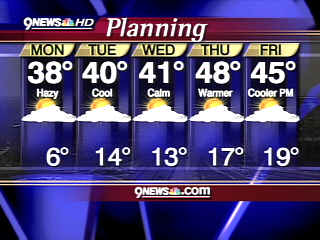
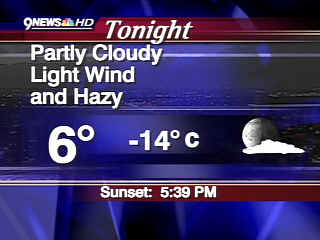
I hope to start this contest as soon as I've raised some funds for good prizes. Of course, donating good prizes is most welcome too. In order to provide some motivation, I'm going to do something that will hopefully inspire you to donate. It's butt-ass cold in Denver this week, and it's not warming up anytime soon. Here's the current forecast from the local news channel:

Forecast: 2/19/06 - 2/24/06

So to try and raise money, I'm going to ride my bike to work every day this week. Will this inspire folks to donate? I don't know, but it's worth a try. I'll try to be in the office by 9, and won't be home before 5. This should ensure that it's good and cold out. Furthermore, I'll blog about my ride everyday, and hopefully snap some pictures as well. It's supposed to snow tonight, so this should be good.

320

Remember, anything will help - and all donations will go to a good cause. I plan on starting the actual design contest next week sometime. Now it's time to donate using the button below - and watch me freeze my ass off this week! ;-)

Posted in The Web at Feb 19 2006, 09:34:39 PM MST 9 Comments

RIFE: Which template syntax looks best to you?

Geert Bevin of the RIFE project asks:

Many times I have wondered why people are so reluctant to investigate RIFE. After having asked around a bit, the most recurring critique was that our template syntax is too arcane at the initial glance. Somehow the look of the tags syntax pushes people away without them ever checking out any of the features of our framework.

Ironically, none of the users consider the syntax to be a problem. Many even love how it stands out while still being totally invisible to a browser or an XHTML editor.

Still, initial adoption seems to be all about appearances, so I think this issue needs to be addressed. That's why I'm asking you, the non-rife users which alternate syntax looks best to you. [Read More »]

I'm one of those folks that thinks RIFE's current template syntax is difficult to understand. I was scared away from RIFE for this reason alone. It's good to see them asking the community for a better formula.

There's one thing I've learned from leading an open source project: your users aren't always right. Just because they like the way things are done, it doesn't make it the best way to do it. Often, developers merely like something because they've learned it, and would rather not learn something new. Look at all the folks that prefer Struts, yet have never tried another web framework.

Personally, I like Velocity's variable style, which is now used by JSP 2.0. Most new Java web developers are going to learn JSP. If you can make the transition from JSP to your template syntax easier, you'll likely get more users.

Posted in Java at Feb 19 2006, 08:33:00 PM MST 3 Comments

Redirect-after-Post in Tapestry 4.0

I just noticed a good Tapestry nugget on Howard's blog. With Tapestry 3.0, one of the things I complained about was the need to throw an exception when redirecting. With 4.0, it looks like you can plug-in this flash component and get exactly the flash message functionality I try to put in all the web frameworks that AppFuse supports. Now I just need to figure out how to do @InjectObject("engine-service:page") without using annotations.

I'm hoping to upgrade AppFuse to WebWork 2.2 and Tapestry 4.0 in the next few days.

Posted in Java at Feb 17 2006, 12:44:14 PM MST 8 Comments

Updated Web Tier Specs for Java EE 5

Ed Burns (JSP Spec Lead) points out there's New Drafts of Java EE Web Tier: JSF 1.2, JSP 2.1, Servlet 2.5

I'm pleased to announce another revision of the Java EE Web Tier. In Jan Luehe's blog you can find out what's new in JSP 2.1 Proposed Final Draft 2 (PFD2). The Change Log for Servlet 2.5 will give you the scoop on the Servlet spec. This blog entry will show what's new in the JSF spec.

In JSF, the most visible new feature since the last draft of the spec is the addition of the invokeOnComponent() method on UIComponent. See below for more details.

This revision of the Java Web Tier is fully implemented in glassfish build 37, Sun's open source Java EE 5 Application Server, and the basis for the upcoming Java EE SDK.

I changed the link to Jan Luehe's blog because Ed's link seems to be incorrect. My guess is Java EE will be finalized and released before JavaOne. This is how Sun usually does things: work like mad until JavaOne, then take a week or two off to celebrate the release. Other rumors I've heard are that JBoss and Geronimo hope to release Java EE 5 compliant releases by or at JavaOne.

2006 is shaping up to be quite a year for the popular Java web frameworks. Tapestry 4.0, WebWork 2.2, JSF 1.2 and Spring MVC 2.0 (with form tag libraries and smart defaults). The question is, how long will it take for MyFaces to implement JSF 1.2? And when will we see a large-scale site deployed with JSF?

Why isn't Struts or your favorite framework in this list? Struts is being replaced by WebWork and the rest simply don't have the market share. No one has heard of RIFE or Wicket. However, that didn't stop me from encouraging SourceBeat to publish a Wicket book. Having good (published) documentation about a project is the first step to corporate adoption IMO.

Posted in Java at Feb 17 2006, 11:06:34 AM MST Add a Comment