Matt RaibleMatt Raible is a writer with a passion for software. Connect with him on LinkedIn.

The Angular Mini-Book The Angular Mini-Book is a guide to getting started with Angular. You'll learn how to develop a bare-bones application, test it, and deploy it. Then you'll move on to adding Bootstrap, Angular Material, continuous integration, and authentication.

Spring Boot is a popular framework for building REST APIs. You'll learn how to integrate Angular with Spring Boot and use security best practices like HTTPS and a content security policy.

For book updates, follow @angular_book on Twitter.

The JHipster Mini-Book The JHipster Mini-Book is a guide to getting started with hip technologies today: Angular, Bootstrap, and Spring Boot. All of these frameworks are wrapped up in an easy-to-use project called JHipster.

This book shows you how to build an app with JHipster, and guides you through the plethora of tools, techniques and options you can use. Furthermore, it explains the UI and API building blocks so you understand the underpinnings of your great application.

For book updates, follow @jhipster-book on Twitter.

10+ YEARS


Over 10 years ago, I wrote my first blog post. Since then, I've authored books, had kids, traveled the world, found Trish and blogged about it all.
You searched this site for "struts". 659 entries found.

You can also try this same search on Google.

AppFuse 2.1 Milestone 2 Released

I'm pleased to announce the 2nd milestone release of AppFuse 2.1. This release includes upgrades to all dependencies to bring them up-to-date with their latest releases. Most notable are Spring 3 and Struts 2.1. This release fixes many issues with archetypes and contains many improvements to support Maven 3. For more details on specific changes see the 2.1.0 M2 release notes.

What is AppFuse?
AppFuse is an open source project and application that uses open source frameworks to help you develop Web applications quickly and efficiently. It was originally developed to eliminate the ramp-up time when building new web applications. At its core, AppFuse is a project skeleton, similar to the one that's created by your IDE when you click through a wizard to create a new web project. If you use JRebel with AppFuse, you can achieve zero-turnaround in your project and develop features without restarting the server.

Release Details
Archetypes now include all the source for the web modules so using jetty:run and your IDE will work much smoother now. The backend is still embedded in JARs, enabling you to choose with persistence framework (Hibernate, iBATIS or JPA) you'd like to use. If you want to modify the source for that, add the core classes to your project or run "appfuse:full-source".

AppFuse comes in a number of different flavors. It offers "light", "basic" and "modular" and archetypes. Light archetypes use an embedded H2 database and contain a simple CRUD example. In the final 2.1.0 release, the light archetypes will allow code generation like the basic and modular archetypes. Basic archetypes have web services using CXF, authentication from Spring Security and features including signup, login, file upload and CSS theming. Modular archetypes are similar to basic archetypes, except they have multiple modules which allows you to separate your services from your web project.

AppFuse provides archetypes for JSF, Spring MVC, Struts 2 and Tapestry 5. The light archetypes are available for these frameworks, as well as for Spring MVC + FreeMarker, Stripes and Wicket.

Please note that this release does not contain updates to the documentation. Code generation will work, but it's likely that some content in the tutorials won't match. For example, you can use annotations (vs. XML) for Spring MVC and Tapestry is a whole new framework. I'll be working on documentation over the next several weeks in preparation for the 2.1 final release.

For information on creating a new project, please see the QuickStart Guide.

If you have questions about AppFuse, please read the FAQ or join the user mailing list. If you find bugs, please create an issue in JIRA.

Thanks to everyone for their help contributing patches, writing documentation and participating on the mailing lists.

Posted in Java at Nov 15 2010, 03:28:57 PM MST 2 Comments

RE: Moving from Spring to Java EE 6: The Age of Frameworks is Over

Last Tuesday, Cameron McKenzie wrote an interesting article on TheServerSide titled Moving from Spring to Java EE 6: The Age of Frameworks is Over. In this article, Cameron says the following:

J2EE represents the past, and Java EE 6 represents the future. Java EE 6 promises us the ability to go beyond frameworks. Frameworks like Spring are really just a bridge between the mistakes of the J2EE past and the success of the Java EE 6 future. Frameworks are out, and extensions to the Java EE 6 platform are in. Now is the time to start looking past Spring, and looking forward to Seam and Weld and CDI technologies.

He then links to an article titled Spring to Java EE - A Migration Experience, an article written by JBoss's Lincoln Baxter. In this article, Lincoln talks about many of the technologies in Java EE 6, namely JPA, EJB, JSF, CDI and JAX-RS. He highlights all the various XML files you'll need to know about and the wide variety of Java EE 6 application servers: JBoss AS 6 and GlassFish v3.

I don't have a problem with Lincoln's article, in fact I think it's very informative and some of the best documentation I've seen for Java EE 6.

I do have some issues with Cameron's statements that frameworks are mistakes of the J2EE past and that Java EE 6 represents the future. Open source frameworks made J2EE successful. Struts and Hibernate came out in the early days of J2EE and still exist today. Spring came out shortly after and has turned into the do-everything J2EE implementation it was trying to fix. Java EE 6 might be a better foundation to build upon, but it's certainly not going to replace frameworks.

To prove my point, let's start by looking at the persistence layer. We used to have Hibernate based on JDBC, now we have JPA implementations built on top of the JPA API. Is JPA a replacement for all persistence frameworks? I've worked with it and think it's a good API, but the 2.0 version isn't available in a Maven repo and Alfresco recently moved away from Hibernate (which == JPA IMO) to iBATIS for greater data access layer control and scalability. Looks like the age of frameworks isn't over for persistence frameworks.

The other areas that Java EE 6 covers that I believe frameworks will continue to excel in: EJB, CDI, JSF and JAX-RS. Personally, I don't have a problem with EJB 3 and think it's a vast improvement on EJB 2.x. I don't have an issue with CDI either, and as long as it resembles Guice for dependency injection, it works for me. However, when you get into the space I've been living in for the last couple years (high-traffic public internet sites), EJB and things like the "conversation-scope" feature of CDI don't buy you much. The way to make web application scale is to eliminate state and cache as much as possible, both of which Java EE doesn't provide much help for. In fact, to disable sessions in a servlet-container, you have to write a Filter like the following:

public class DisabledSessionFilter extends OncePerRequestFilter {

    /**
     * Filters requests to disable URL-based session identifiers.
     */
    @Override
    protected void doFilterInternal(final HttpServletRequest request,
                                    final HttpServletResponse response,
                                    final FilterChain chain)
            throws IOException, ServletException {

        HttpServletRequestWrapper wrappedRequest = new HttpServletRequestWrapper(request) {

            @Override
            public HttpSession getSession(final boolean create) {
                if (create) {
                    throw new UnsupportedOperationException("Session support disabled");
                }
                return null;
            }

            @Override
            public HttpSession getSession() {
                throw new UnsupportedOperationException("Session support disabled");
            }
        };

        // process next request in chain
        chain.doFilter(wrappedRequest, response);
    }
}

What about JAX-RS? Does it replace the need for frameworks? I like the idea of having a REST API in Java. However, its reference implementation is Jersey, which seems more like a framework than just Java EE. If you choose to use JAX-RS in your application, you still have to choose between CXF, Jersey, RESTEasy and Restlet. I compared these frameworks last year and found the Java EE implementation lacking in the features I needed.

Finally, let's talk about my-least-framework-web-framework: JSF. The main reason I don't like JSF is because of its 1.x version. JSF 1.0 was released a year before the Ajax term was coined (see timeline below). Not only did it take forever to develop as a spec, but it tried to be a client-component framework that was very stateful by default.
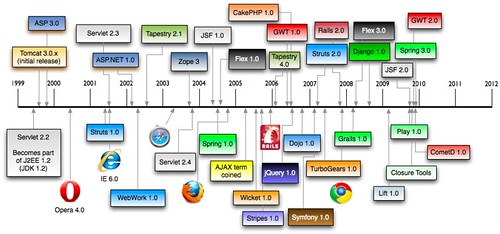
History of Web Frameworks

Now that JSF 2.0 is out, it has Ajax integrated and allows you to use GET instead of POST-for-everything. However, the only people that like Ajax integrated into their web frameworks are programmers scared of JavaScript (who probably shouldn't be developing your UI). Also, the best component development platform for the web is JavaScript. I recommend using an Ajax framework for your components if you really want a rich UI.

Sure you can use the likes of Tapestry and Wicket if you like POJO-based web development, but if you're looking to develop a webapp that's easy to maintain and understand, chances are that you'll do much better with traditional MVC frameworks like Spring MVC and Struts 2. The simplicity and popularity of Rails and Grails further emphasize that developers prefer these types of web frameworks.

Another reason I don't like JSF: there's very few developers in the wild happy with it. The major promoters of JSF are book authors, trainers, Java EE Vendors and MyFaces developers. Whenever I speak at conferences, I ask folks to raise their hands for the various web frameworks they're using. I always ask the JSF users to keep their hands up if they like it. Rarely do they stay up.

So it looks like we still need web frameworks.

Eberhard Wolff has an interesting post where he defends Spring and talks about the productivity comparisons between Spring and Java EE. He recommends using Grails or Spring Roo if you want the level of productivity that Ruby on Rails provides. That's a valid recommendation if you're building CRUD-based webapps, but I haven't developed those in quite some time. Nowadays, the apps I develop are true SOFEA apps, where the backend serves up XML or JSON and the frontend client is HTML/JavaScript/CSS, Android, iPad or Sony Blu-Ray players. On my current project, our services don't even talk to a database, they talk to a CMS via RESTful APIs. We use Spring's RestTemplate for this and HttpClient when it doesn't have the features we need. Not much in Java EE 6 for this type of communication. Sure, Jersey has a client, but it's certainly not part of the Java EE spec.

As far as getting Ruby on Rails' zero-turnaround productivity, I don't need Grails or Spring Roo, I simply use IDEA and JRebel.

Conclusion
I don't see how new features in Java EE 6 can mean the age of frameworks is over. Java SE and J2EE have always been foundations for frameworks. The Java EE 6 features are often frameworks in themselves that can be used outside of a Java EE container. Furthermore, Java EE 6 doesn't provide all the features you need to build a high-scale web app today. There's no caching, no stateless web framework that can serve up JSON and HTML and no hot-reload productivity enhancements like JRebel. Furthermore, there's real excitement in Javaland for languages like Scala, Groovy and JRuby. All of these languages have web frameworks that've made many developers happy.

Here's to the Age of Frameworks - may it live as long as the JVM!

P.S. If you'd like to hear me talk about web frameworks on the JVM, I'll be speaking at The Colorado Springs Open Source Meetup and Devoxx 2010 in the near future.

Posted in Java at Oct 16 2010, 03:19:07 PM MDT 37 Comments

Comparing Kick-Ass Web Frameworks at The Rich Web Experience

Yesterday, I delivered my Comparing Kick-Ass Web Frameworks talk at the Rich Web Experience in Orlando, Florida. Below are the slides I used:

Although it's difficult to convey a presentation in a slide deck, I can offer you my conclusion: there is no "best" web framework. I believe web frameworks are like spaghetti sauce in that everyone has different tastes and having so many choices is necessary to satisfy everyone. You can read more about the plural nature of perfection in Malcolm Gladwell's The Ketchup Conundrum (a written version of What we can learn from spaghetti sauce). Even though there is no "best" web framework, I believe GWT, Flex, Rails and Grails are frameworks that every web developer should try. They really do make it fun to develop web applications.

You can find the slides for my other RWE talk at Building SOFEA Applications with GWT and Grails.

Kudos to Jay Zimmerman for putting on a great show in Orlando this year. I had a great time talking with folks and learning in the sessions I attended. I particularly enjoyed bringing my parents and kids and staying at such a nice resort. Disney World (Magic Kingdom) and Universal Studios was very enjoyable due to the short lines. Also, the weather was perfect - especially considering the freezing cold in Denver this week. ;-)

Posted in Java at Dec 04 2009, 08:16:48 AM MST 3 Comments

AppFuse 2.1 Milestone 1 Released

The AppFuse Team is pleased to announce the first milestone release of AppFuse 2.1. This release includes upgrades to all dependencies to bring them up-to-date with their latest releases. Most notable are Hibernate, Spring and Tapestry 5.

What is AppFuse?
AppFuse is an open source project and application that uses open source tools built on the Java platform to help you develop Web applications quickly and efficiently. It was originally developed to eliminate the ramp-up time found when building new web applications for customers. At its core, AppFuse is a project skeleton, similar to the one that's created by your IDE when you click through a wizard to create a new web project.

Release Details
Archetypes now include all the source for the web modules so using jetty:run and your IDE will work much smoother now. The backend is still embedded in JARs, enabling you to choose which persistence framework (Hibernate, iBATIS or JPA) you'd like to use. If you want to modify the source for that, add the core classes to your project or run appfuse:full-source.

In addition, AppFuse Light has been converted to Maven and has archetypes available. AppFuse provides archetypes for JSF, Spring MVC, Struts 2 and Tapestry 5. The light archetypes are available for these frameworks, as well as for Spring MVC + FreeMarker, Stripes and Wicket.

Other notable improvements:

Please note that this release does not contain updates to the documentation. Code generation will work, but it's likely that some content in the tutorials won't match. For example, you can use annotations (vs. XML) for dependency injection and Tapestry is a whole new framework. I'll be working on documentation over the next several weeks in preparation for Milestone 2.

AppFuse is available as several Maven archetypes. For information on creating a new project, please see the QuickStart Guide.

To learn more about AppFuse, please read Ryan Withers' Igniting your applications with AppFuse.

The 2.x series of AppFuse has a minimum requirement of the following specification versions:

  • Java Servlet 2.4 and JSP 2.0 (2.1 for JSF)
  • Java 5+

If you have questions about AppFuse, please read the FAQ or join the user mailing list. If you find bugs, please create an issue in JIRA.

Thanks to everyone for their help contributing code, writing documentation, posting to the mailing lists, and logging issues.

Posted in Java at Nov 19 2009, 07:16:36 AM MST 8 Comments

The Future of Web Frameworks at TSSJS

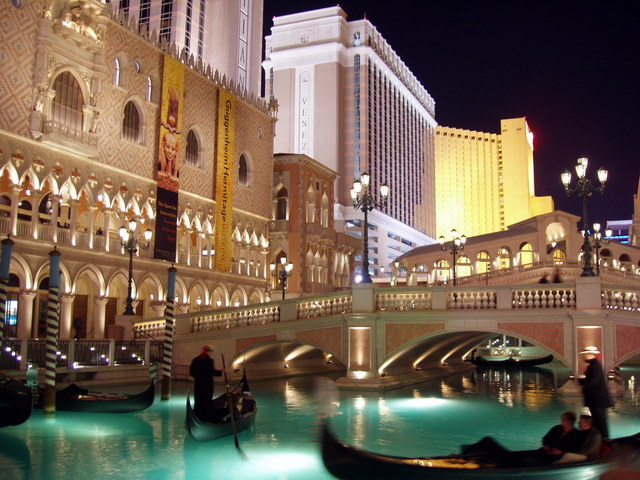
Caesars Palace For TSSJS Vegas 2010, I submitted two proposals for talks: GWT vs. Flex Smackdown and The Future of Web Frameworks. As of today, the 2nd is the only one that shows up on the conference agenda, but hopefully the former will get accepted too. Here's a description of this talk:

With rich Ajax applications and HTML5 on the horizon, are web frameworks still relevant? Java web frameworks like Struts and Spring MVC were all the rage 5 years ago. Component-based frameworks like Tapestry, JSF and Wicket made it easier to create re-usable applications. But what about the Mobile Web and offline applications?

Are Titanium, Adobe Air and Gears the future? If you're embracing the RESTfulness of the web, do you even need a web framework, or can you use use JAX-RS with an Ajax toolkit?

These questions and many more are examined, answered and debated in this lively session. Bring your opinions and experiences to this session to learn about what's dead, what's rising and what's here to stay. If you're a web framework fan, this session is sure to please.

I believe this talk will be a lot of fun to create and deliver. To create it, I'd like to make it a collaborative effort with the web framework community (users and developers). To kick things off, below is an initial rough outline/agenda:

  • Title
  • Introduction
  • Problem/Purpose
  • Agenda
    • How did we get here?
    • Where are we going?
    • How do we get there?
    • Q and A
  • History of Web Frameworks
    • Deep History (CGI, etc.)
    • Java's Rise
    • PHP
    • Rails -> Grails
    • Ajax Frameworks
    • RESTify!
    • SOFEA, APIs, etc.
  • The Future
    • HTML5
    • GWT, Cappucino and Spoutcore (compare to Java and compilers)
    • The Binary Players (Flex, JavaFX and Silverlight)
    • Getting Rich
    • Speed (is it a problem? YES!)
    • IE 6 will die.
    • Chrome OS
    • The Mobile Web
    • Desktop Webapps (Titanium, AIR, etc.)
    • Or is this the present? Future is bleeding edge.
  • Getting There: It's all about the APIs
    • Allows for any client
    • Web Framework skills transfer to desktop - and phone!
    • Speed will continue to be *very* important
    • Innovation, something we haven't thought of
  • Fallout
    • Interest in server-side frameworks will continue, but frameworks will become unmaintained
    • Ajax Frameworks will continue to innovate
    • HTML5 Frameworks?
    • IE 6 (hopefully!)
    • Desktop and Mobile with Web Technologies
    • Watch out for the next big thing! (or What do you think is the next big thing?)
  • Conclusion
  • Q and A

Is there anything I'm missing that's important for the future of web frameworks? Are there items that should be removed? Any advice is most welcome.

Reminder: I'll be speaking at tomorrow's DJUG if you'd like to discuss your thoughts in person.

Posted in Java at Nov 10 2009, 01:24:39 PM MST 11 Comments

A Letter to the AppFuse Community

The last AppFuse release was way back in May 2008. Many folks have asked when the next release would be ever since. Often, I've said "sometimes this quarter", but obviously, that's never happened. For that, I apologize.

There are many reasons I haven't worked on AppFuse for the past 18 months, but it mostly comes down to the fact that I didn't make time for it. The good news is I'm working on it again and will have a release out sometime this month. Unfortunately, it probably won't be a 2.1 final release, but there's so many things that've changed, I feel like a milestone release is a good idea. Here's a brief summary of changes so far:

  • Changed archetypes to include all source and tests for the "webapp" portion of the application. No more warpath plugin, merging wars and IDE issues. Using "mvn jetty:run" should work as expected.
  • Moved from Spring XML to Annotations.
  • AppFuse Light converted to Maven modules and now depends on AppFuse's backend.
  • Published easier to use archetype selection form in the QuickStart Guide.
  • Published archetype selection form for AppFuse Light. I do plan on combining these forms as soon as I figure out the best UI and instructions for users to choose AppFuse or AppFuse Light.
  • Upgraded all libraries to latest released versions (Spring 3 hasn't had a final release yet).
  • Upgraded to Tapestry 5 thanks to Serge Eby. I still need to complete tests and code generation for tests.
  • Added Compass support thanks to a patch from Shay Banon.
  • Upgraded from XFire to CXF for Web Services.
  • Moved Maven repository to Sonatype's OSS Repository Hosting for snapshots and releasing to Maven Central. There are no longer any AppFuse-specific artifacts, all are available in central.

I realize there's many full-stack frameworks that do the same thing as AppFuse with less code. Examples include Ruby on Rails, Grails, Seam, Spring Roo and the Play framework. However, there seems to be quite a few folks that continue to use AppFuse and it stills serves the community as a nice example of how to integrate frameworks. Furthermore, it helps me keep up with the latest framework releases, their quirks and issues that happen when you try to integrate them. In short, working on it helps me stay up to speed with Java open source frameworks.

For those folks that like the 1.x, Ant-based version of AppFuse, there will not be a 1.9.5 release. I know I promised it for years, but it's simply something I will not use, so I'd rather not invest my time in it. I'm sorry for lying to those that expected it.

So what's the future of AppFuse? Will it continue to integrate web frameworks with Spring and popular persistence frameworks? Possibly, but it seems more logical to align it with the types of Ajax + REST applications I'm creating these days. I'm currently thinking AppFuse 3.0 would be nice as a RESTful backend with GWT and Flex UIs. I might create the backend with CXF, but it's possible I'd use one of the frameworks mentioned above and simply leverage it to create the default features AppFuse users have come to expect.

More than anything, I'm writing this letter to let you know that the AppFuse project is not dead and you can expect a release in the near future.

Thanks for your support,

Matt

Posted in Java at Nov 04 2009, 12:17:17 AM MST 44 Comments

What would you like to see at TSSJS 2010?

The Venetian A couple months ago, I was asked by TheServerSide to speak at next year's TheServerSide Java Symposium in Las Vegas. In addition, they asked me to help them evaluate presentation proposals and suggest topics/speakers.

First of all, I think the biggest thing that TSSJS could do to improve is to host more networking events. With the JavaOne Party being over, I think there's a tremendous opportunity to fill a gap in the networking needs of the Java Community. When I first attended TSSJS in 2006, there were a fair amount of parties and everyone got to interact quite a bit. In 2008, there were no networking events. I believe having a strong networking story would attract a lot more attendees, companies and sponsors.

Secondly, I think it's possible that TSSJS has too many server-side related sessions. IMO, the server-side (and middleware in general) isn't that exciting. TechTarget appears to own TheClientSide, so why not add some more client-side stuff to the mix? For example, I'd love to see a Struts 1 app-makeover using different technologies (for example, Flex, GWT and jQuery). I think HTML5 and Google Wave's Architecture sessions would be interesting too. If adding client-side sessions is too far away from TheServerSide, maybe it should be renamed to TheServerSide JVM Symposium and there can be all kinds of sessions on JVM languages (e.g. Scala, JRuby, Groovy) and all the great things those languages can accomplish.

Lastly, I've been asked to send a couple session proposals. Currently, I'm thinking about a doing GWT vs. Flex Smackdown with James Ward, but I'm open to other ideas. It's been quite awhile since I did a "Comparing Web Frameworks" talk. Maybe "Hot Web Frameworks for 2010" is more appropriate? I also think it'd be interesting to do a somewhat philosophical talk on "The State of Web Frameworks" and where we're headed in the next year.

What would make you want to attend TSSJS next year? Let me know your thoughts and I'll do my best to make them a reality.

Update October 22, 2009: Whoo hoo! It looks like TheClientSide will be a part of TSSJS Vegas next year. Should be a great show.

Posted in Java at Oct 12 2009, 11:28:21 AM MDT 3 Comments

Ajax Framework Analysis Results

Way back in January, I wrote about how my colleagues and I were evaluating Ajax frameworks to build a SOFEA-style architecture. To make our choice, we used the following process:

  1. Choose a short list of frameworks to prototype with.
  2. Create an application prototype with each framework.
  3. Document findings and create a matrix with important criteria.
  4. Create presentation to summarize document.
  5. Deliver document, presentation and recommendation.

When I wrote that entry, we had just finished step 2 and were starting step 3. I first wrote this blog post a week later, when we delivered step 5. Here is the comparison and conclusion sections of the analysis document we composed.

Framework Comparison
In order to evaluate the different frameworks against important criteria, we created a matrix with weights and ranks for each framework. This matrix shows how our weighting and rankings lead us to the winner for our project. You can view this matrix online or see below for a summary.

Note: Criteria whose values were identical across all candidates were weighted at zero. Charting capability was weighted at zero b/c we decided to use Flash for this.

This matrix indicates that GWT is the best candidate for our team to develop SOFEA-style applications with. In addition to the matrix, below are graphs that illustrate interesting (and possibly meaningless) statistics about each project.

Number of Committers

Books on Amazon

Conclusion
After working with the various frameworks, we believe that all the frameworks were very good and could be used to write applications with. If all weights are equal, these frameworks were almost even when compared against our evaluation criteria. The graph below illustrates this.

Ranking with equal criteria weights

Even after applying the weighted criteria, the evenness doesn't change a whole lot.

Ranking with weighted criteria

Without considering the even or weighted criteria, we believe the decision all comes down to what the developers on the project feel they will be most comfortable with. If you're developing with Dojo or YUI, chances are you're dressing up existing HTML and possibly using progressive enhancement to add more rich functionality. On the other hand, Ext JS and GWT are similar to Swing programming where you build the UI with code (JavaScript for Ext JS, Java for GWT).

The tools available for JavaScript development have gotten increasingly better in recent years. IntelliJ IDEA has a JavaScript Editor that provides many of the same features as its Java editor. Aptana Studio also has excellent support for authoring and debugging JavaScript. However, we believe the Java debugging and authoring support in IDEs is much better. Furthermore, we are more familiar with organizing code in Java projects and feel more comfortable in this development environment.

Based on this evaluation, we believe that GWT is the best framework for our team to develop SOFEA-style applications with.

Flash Forward to Today...
The core GWT library from Google doesn't have a whole lot of widgets, nor do they look good out-of-the-box. So early on, we experimented with two alternative implementations that continue to leverage GWT concepts and tools:

  • GXT: a GWT version of Ext JS
  • SmartGWT: a GWT version of SmartClient

Unfortunately, over the past few months, we've found that both of these implementations are too heavy for our requirements, mostly because of the file size of the generated JavaScript code. For example, a feature I wrote generated a 275K *.cache.html file using GXT. After determining that was too slow to give users the initial "pop", I re-wrote it without GXT. After a day, we had an application with *.cache.html files of 133K. Yes, that's over a 50% reduction in size!*

Because of these findings, we are proceeding with the core GWT library from Google and adding in new components as needed. It is cool to know you can make a UI "pop" with GWT, as long as you stick to the core - close-to-the-metal - components. For those applications that can afford an initial "loading..." state, I'd definitely recommend looking at GXT and SmartGWT.

* To make refactoring easier, I copied GXT MVC into our source tree and modified all imports.

Posted in Java at Apr 23 2009, 08:34:44 PM MDT 53 Comments

Modularizing GWT Applications with GWT-Maven

Last week, I spent some time modularizing the GWT application I'm working on. By modularizing, I mean splitting the code from one GWT module into a "core" and "webapp" module. The reason for doing this was so the "core" module could be used by another GWT application. Creating GWT Modules is fairly straightforward, but it wasn't as intuitive as expected when using the gwt-maven-plugin.

The hardest part of moving the code was figuring out how to run tests in the new "core" module. After getting it all working, it seems easy enough. Hopefully this post will make it easy for others. Here's the steps I'd recommend:

  1. Convert your GWT project into a multi-module project where you have a top-level pom.xml and two sub-modules (e.g. gwt-core and gwt-webapp).
  2. Do the normal single-to-multi-project Maven stuff like declaring the <parent> element in the modules and moving plugins/dependencies to the top-level pom.xml.
  3. Refactor your gwt-webapp project to push down all shared classes (and their tests) to gwt-core.
  4. In the gwt-core project, include *.xml and *.java in your JAR so GWT can extract/compile the source code when building gwt-webapp.
    <resources>
        <resource>
            <directory>src/main/java</directory>
            <includes>
                <include>**/*.java</include>
                <include>**/*.xml</include>
            </includes>
        </resource>
    </resources>
    
  5. In gwt-core/src/main/java, create a Core.gwt.xml that references the modules you'd like to use in all your applications. For example:
    <module>
        <inherits name="com.google.gwt.user.User"/>
        <inherits name="com.google.gwt.i18n.I18N"/>
        <inherits name="com.extjs.gxt.ui.GXT"/>
        <inherits name="pl.rmalinowski.gwt2swf.GWT2SWF"/>
    </module>
    
  6. Now the tricky part begins, mostly because of how the gwt-maven plugin currently works. In src/test/java, create a NoOpEntryPoint.gwt.xml that inherits your Core module and defines an EntryPoint.
    <module>
        <inherits name="com.company.app.Core"/>
        <entry-point class="com.company.app.NoOpEntryPoint"/>
    </module>
    
  7. Create a NoOpEntryPoint.java class in the same directory as NoOpEntryPoint.gwt.xml.
    public class NoOpEntryPoint implements EntryPoint {
        
        public void onModuleLoad() {
            // do nothing
        }
    }
    
  8. In any class that extends GWTTestCase (I usually create a parent class for all tests), reference the NoOpEntryPoint in the getModuleName() method.
        @Override
        public String getModuleName() {
            return "com.company.app.NoOpEntryPoint";
        }
    
  9. Lastly, in the gwt-maven plugin's configuration (in gwt-core/pom.xml), reference the NoOpEntryPoint in <compileTargets>, a non-existent file in <runTarget> and only the "test" goal in the executions.
    <plugin>
        <groupId>com.totsp.gwt</groupId>
        <artifactId>maven-googlewebtoolkit2-plugin</artifactId>
        <version>2.0-beta26</version>
        <configuration>
            <compileTargets>
                <value>com.company.app.NoOpEntryPoint</value>
            </compileTargets>
            <runTarget>com.company.app.NoOpEntryPoint/doesntexist.html</runTarget>
            <logLevel>INFO</logLevel>
            <style>OBF</style>
            <noServer>false</noServer>
            <extraJvmArgs>-Xmx512m</extraJvmArgs>
            <gwtVersion>${gwtVersion}</gwtVersion>
            <testFilter>*GwtTestSuite.java</testFilter>
            <testSkip>${skipTests}</testSkip>
        </configuration>
        <executions>
            <execution>
                <goals>
                    <goal>test</goal>
                </goals>
            </execution>
        </executions>
    </plugin>
    

The results of modularizing your application are beneficial (shared code) and detrimental (you have to mvn install gwt-core whenever you make changes in shared classes). If you know of a way to configure the gwt-maven plugin to read sources from both gwt-core and gwt-webapp in hosted mode, I'd love to hear about it.

Posted in Java at Mar 23 2009, 10:36:08 AM MDT 11 Comments

GWT and AppFuse

Someone recently sent me the following e-mail asking about GWT integration in AppFuse.

I see from your blog that you're spending some time with GWT at the moment. What's your plan, are you going to integrate GWT as another UI Option for AppFuse?

The reason I'm asking is that I actually checked out all of the AppFuse code from the svn repository yesterday, with the intention of starting off adding some GWT stuff in there. My intention was to start by getting a basic Maven archetype together for GWT as an AppFuse UI.

However, if you're planning on doing this yourself in the near future, then there's no point in me starting doing it, I'd have to learn how to write archetype's for a start (not that it looks too difficult) but you'd obviously do it much quicker.

Being a good open-source developer, I moved the discussion to the developer mailing list and replied there:

It's likely I'll create a version of AppFuse Light with GWT, but I doubt I'll do it in the near future. I hope to release AppFuse 2.1 first (which will include "light" archetypes). I wouldn't get your hopes up in waiting for me to do the work. However, I'd be happy to assist you in doing it. AppFuse Light is now modular and uses the AppFuse backend.

http://raibledesigns.com/rd/entry/appfuse_light_converted_to_maven

Here's how I believe GWT should be integrated:

  1. Create an appfuse-ws archetype that serves up RESTful services (http://issues.appfuse.org/browse/APF-897).
  2. Create an appfuse-gwt archetype that consumes those services. This archetype would contain a proxy servlet that allows #1 to be on a separate host/port.

In addition to #1, I hope to convert the Struts 2 and Spring MVC archetypes to use those frameworks' REST support.

For #2, we could use SmartGWT or GXT. SmartGWT might be better since Sanjiv is a committer on this project. ;-)

I know I've been slacking on AppFuse development, but it is ski season and running to work seems to drain my late-night coding ambitions. With that being said, I'm committed to getting AppFuse 2.1 released by JavaOne (hopefully sooner). I figure it's a good week's worth of work and I'll probably have to do it late at night to find the time. That's OK though, I usually really start to enjoy it once I get into it.

Posted in Java at Mar 04 2009, 10:50:26 PM MST 5 Comments